Starbucks' critics are making a big mistake
(CNN) Congratulations, Internet haters! Well done, keepers of the one-true-way-to-talk-about-race!
If we don't tamp down the backlash against Starbucks "Race Together" campaign, I fear that no major corporation will even try to talk about race again -- for maybe 10 or 20 years.
Is that really what we want?
But for crying out loud! In the past 48 hours, racial justice activists have spilled more digital ink criticizing Starbucks for trying to fight racism than they have against other (actually racist) companies. The truth is that we cannot have it both ways. We cannot demand that companies address race, and then attack them when they try.
Yes, it seems like harmless fun to pile on or retweet the snark. At some point, all of us have enjoyed the cheap thrill one gets by kicking around a big company online. But the cost this time is that no corporation will want to do anything creative or constructive on racial subjects for a very long time.
In fact, some activists are responding with such little sympathy, empathy and grace, that other corporations are like to run the other way. Again, is that what we want?
Mellody Hobson, an African-American member of the Starbucks board and a personal friend, is a major supporter of this campaign. How will other corporate boards react in the future when a minority member encourages the company to publicly address issues of racial inclusion?
Starbucks is trying to make a positive difference. If the company gets rewarded, others will follow. But nobody wants their brand to get beaten up.
At some point in the future, activists will launch an online petition or protest against a company guilty of some legitimately racist behavior. But how seriously will anyone take us, when even the "good guys" end up getting kicked in the teeth and called racist -- for trying to OPPOSE bigotry?
Modern science tells us that bias lives on, in even the most dedicated anti-racist. The only cure is talking about it. Our country needs more open discussion of race, not less.
Companies who try to further that discussion should be rewarded, even if their initial attempts are imperfect. We can put forward suggestions and criticisms in a constructive manner: "This is a great first step, Corporation! Here are five ways to improve the campaign -- and make it even better." I think any human anywhere would be open to hearing that kind of feedback.
But nobody wants to be called an idiot, just for trying.
Unfortunately, today's vicious backlash against Starbucks could become a case study in proving that -- when it comes to race -- no good deed goes unpunished.
Ironically, after all this is over, Starbucks will still sell plenty of lattes. The people who will suffer the most are the ones who said they wanted a conversation on race in the first place -- but then wouldn't take "yes" for an answer.
'Old guard' civil rights groups blew it on net neutrality
(CNN) The Federal Communications Commission got it right on "net neutrality."
So did President Obama, who took a bold stand in favor of keeping the Internet free.
So did leaders such as Reps. John Lewis, Keith Ellison and Maxine Waters, and the Rev. William Barber II, one of the architects of "Moral Mondays" protests and a member of the national board of the NAACP. So did the United Church of Christ, as well as more than 100 social justice and civil rights groups.
And so did countless progressive, people-powered groups, such as Color of Change, an online community (which I helped to found) dedicated to bringing about positive change for African-Americans. Ditto for tiny, grassroots dynamos like Oakland's Center for Media Justice, led by Malkia Cyril.
You know who got it dead, dead wrong? As much as it pains me to say it: Far too many of our old-school civil rights organizations.
Since the first days of the Internet, one principle has been in place. Put simply, it is that "owning the pipes" does not give you license to mess with what flows through them.
Internet service providers (ISPs) can charge a fee to provide Internet access. But they cannot block or censor content they do not like, or charge for a fast lane, or relegate companies that do not pay up to slow Internet speeds that could frustrate customers.
All the FCC did this week was keep that principle in place.
They made sure the Internet will work the same way the phones do -- a call to the small business down the street does not sound worse or cost more than one to a big chain store.
ISPs like Verizon and Comcast stood to make a killing from blocking this change. But what is shocking is that some trusted civil rights organizations -- including the National Urban League, NAACP, and Rainbow Push -- actively helped the ISPs make their case.
Worst of all, it was a completely avoidable error.
Why drafting Elizabeth Warren is a plus
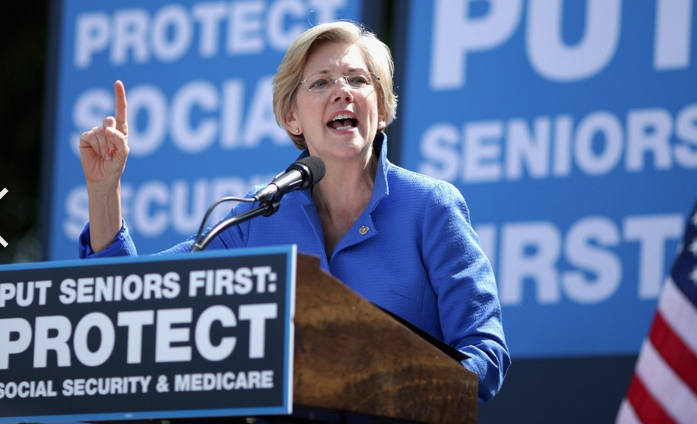
I am not endorsing her as a candidate, at this point. But I am excited about the movement that is pushing her candidacy, unlike a whole bunch of Beltway types who have lined up to say how silly the whole notion is.
Warren will not run, they cry -- though a draft movement has convinced her before. And even if she did, she would not win -- though no one gave President Obama a chance, either.
Still, even if all of the naysayers are somehow on to something, the folks supporting "Run Warren Run" -- MoveOn.org, Democracy for America, and the Working Families Party -- and "Ready for Warren" have it right. Here is why:
It elevates Elizabeth Warren's issues
Even Democrats who support other candidates acknowledge that big banks and other special interests have rigged the game in Washington. Our whole party understands that inequality is worse than it has been since the 1920s, and we need to build an economy where everyone has a fighting chance.
In fact, it is not just Democratic voters who are emboldened by Warren's fight for working families; her ideas ring true in red states and blue states, in rural parts of America and in big cities like Boston and Chicago.
"I came out of a hardworking, middle-class family," Warren often says, in some variation. "I came from an America that created opportunities for people like me, and I now see an America where the government works for people who already have money and power." It is, in her own words, "time to remind politicians that they don't work for the big banks -- they work for us."
That is a voice that would add real value to any party's primary, but especially a party that purports to stand up for working people.
Debates are good for everyone
Contested primaries feature robust discussions on the most pressing issues facing our nation -- and the best ideas for making America stronger. Now, more than ever, we need those discussions.
Many Democrats are voting with Wall Street, while Republicans shout about flat wages. Our country and the Democratic Party deserve a real debate over what we stand for.
And there is a great place to have these debates: in states like Iowa and New Hampshire, where voters are ready to ask candidates tough questions and hear their platforms.
A primary would strengthen the nominee
In the absence of a competitive primary, some have even speculated that theremay not be any Democratic debates before the general election. Call me old-fashioned, but I want to nominate a presidential candidate who has answered tough questions on the crucial issues facing hardworking Americans today.
Some argue that a vigorously contested primary would actually hurt the Democratic Party, that a competitive primary could split the Democratic base or force the eventual nominee to spend too much time and money too early. In other words, exactly what happened in 2008.
Remember how that worked out?
Primaries leave candidates fit, tested, experienced and prepared for the grueling general election campaign. And as we saw in 2008, all that organizing leaves the party energized and ready to get to work.
Finally, a movement to roll back the prison industry

The “tough on crime” movement of the 1970s, ’80s and ’90s ended up as a movement toward mass incarceration. The “lock ’em up” mentality succeeded at turning the home of the free into the land of the imprisoned – but it failed at making us safer.
Today, we are seeing the rise of a new movement – one that aims to roll back the prison industry by using hard science, objective data and innovative models that work.
It’s about time. The United States has only 5 percent of the world’s population, but we are responsible for 25 percent of the jail and prison population. More Americans are under correctional supervision than live in the entire Los Angeles metropolitan area. At a time of tight government budgets, we spend billions each year to put people behind bars – including many who sit in a jail cell simply awaiting trial.
Making even less sense, a disproportionate number of people are behind bars for nonviolent, drug-related crimes. Six out of every 10 people who leave a California prison return within three years; our “corrections” system is not correcting much.
Worse, people of color bear the brunt of this broken system. The U.S. Sentencing Commission found that African Americans receive sentences that are 10 percent longer than those for whites convicted of the same crime. And The Sentencing Project found that black defendants are 20 percent more likely to face prison time.
California and the nation are left with a massive incarceration industry that locks up too many people, wastes too much money, ruins too many lives and violates our sense of racial fairness – all while failing to make our communities much safer.
So how do we get smarter on crime? That question is bringing together unlikely allies from opposite sides of the political spectrum around novel solutions.
State legislatures across the country are finally undoing many failed, inhumane and costly sentencing laws. Here in California, Proposition 47, passed last November, reduced six low-level felonies that can carry prison time to misdemeanors. Just three months later, the law is credited for reducing crowding in jails and prisons – helping the state meet a court-ordered population cap a year earlier than scheduled.
In additional to long-standing reformers who supported Proposition 47, conservatives including former House Speaker Newt Gingrich and Sen. Rand Paul of Kentucky lent their support. The campaign’s single largest individual donor was B. Wayne Hughes Jr., a conservative billionaire from Southern California.
That’s why my organization, the Dream Corps, has launched #cut50, an initiative to safely and smartly reduce America’s prison population by 50 percent by 2025. Our surprisingly broad sweep of partners include everyone from Gingrich to the ACLU.
Meanwhile, there are innovative new approaches to harness data and technology to improve the criminal justice system. DNA testing has reduced the number of people locked up for crimes they didn’t commit; vehicle and body cameras may be able to help improve police-community relations; and gunshot location devices can pinpoint shooters. And we can make better criminal justice decisions by incorporating the kind of data used by health officials to track diseases, by cities to reduce rush-hour traffic and, perhaps most famously, by general managers trying to build a winning baseball team.
In Kentucky, judges in all 120 counties have been using a new risk-assessment tool to assist them when they consider whether to lock up or release defendants between their arrest and trial. This tool is already being used in counties in three other states, including Santa Cruz County here in California. The Laura and John Arnold Foundation, which developed the tool, found that in the first six months, a greater percentage of defendants in Kentucky were released before trial. At the same time, crime among pretrial defendants went down by about 15 percent. Especially important, the tool is race-neutral and relies on a defendant’s criminal history rather than demographic information.
Ultimately, the status quo in our jails and courthouses is bad for California, bad for America and bad for communities of color. The incarceration industry needs a top-to-bottom overhaul – from pretrial detention through to sentencing and rehabilitation. But if we want to reverse this untenable situation, we need to consider creative, data-driven solutions such as Kentucky’s pretrial tool and execute them wisely.
If we are willing to step out of our comfort zone, the result will be fewer people behind bars, less bias and discrimination, lower costs – and safer communities. Now that is getting smart on crime.
Reach the Book
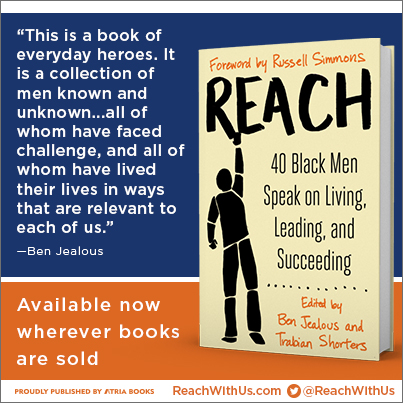
I am thrilled and honored to share my story in Reach.
Reach features 40 first-person accounts from esteemed individuals, such as: John Legend, Isiah Thomas, Louis Gosset, Jr., Ben Jealous, Shaka Senghor and Talib Kweli. The book also highlights experiences and stories from influential community organizers, businessmen, religious leaders, philanthropists and educators.
Read my story and others in Reach. Learn more here: http://reachwithus.com/
Pre-order your copy below.
Seize the moment to reform our prison system
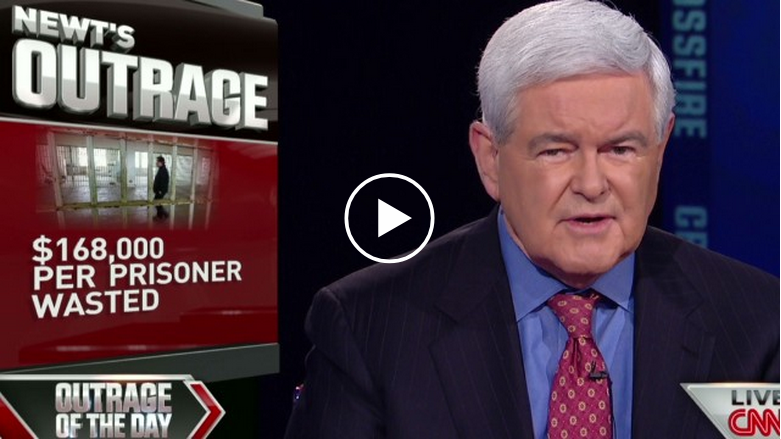
(CNN) -- With Republican majorities coming in both houses of Congress and a Democrat in the White House, many people in Washington believe nothing will get done. We'd like to nominate an exception to that expectation: Criminal justice reform.
Newt has talked about the need for "confidence-building measures" between the President and Republicans in Congress. The idea is that we should work on easier things first, so that we can work on harder things next.
Transforming our nation's failed prison system looks like it could be easier now than anyone expected. Leaders in both parties agree on the need and direction for reform.
They recognize that locking up millions of people for very long periods of time at ballooning costs is not a wise response to nonviolent crime. Warehousing nonviolent offenders for years behind bars has been an economic, moral and human catastrophe.
The United States has 5% of the world's population, but 25% of its incarcerated population. During the past four decades, the rate of incarceration in the U.S. has more than quadrupled, costing us more than $80 billion a year. There are now roughly 2.3 million people in prison or in jail, which is nearly one in every 100 Americans.
As a corrections system, this makes no sense. We must rethink our approach from the ground up. And for federal crimes, we can start by building on bipartisan reforms that are spreading across the country at the state level.
In the true spirit of federalism, states have led the way in passing reforms that protect public safety, more effectively punish and correct nonviolent offenders, save taxpayers money and ensure hardened and violent criminals remain behind bars.
City of Trees
Remember the so-called “Obama Stimulus”? I’ve always been a little surprised by how little attention the media has given the $787 billion American Recovery & Reinvestment Act (ARRA) over these past five years. The “stimulus” was complex, controversial and costly — but incredibly, follow-up coverage has been barely a mere blip on the radar.
Someone should do something about that. And, luckily, two film-makers are.
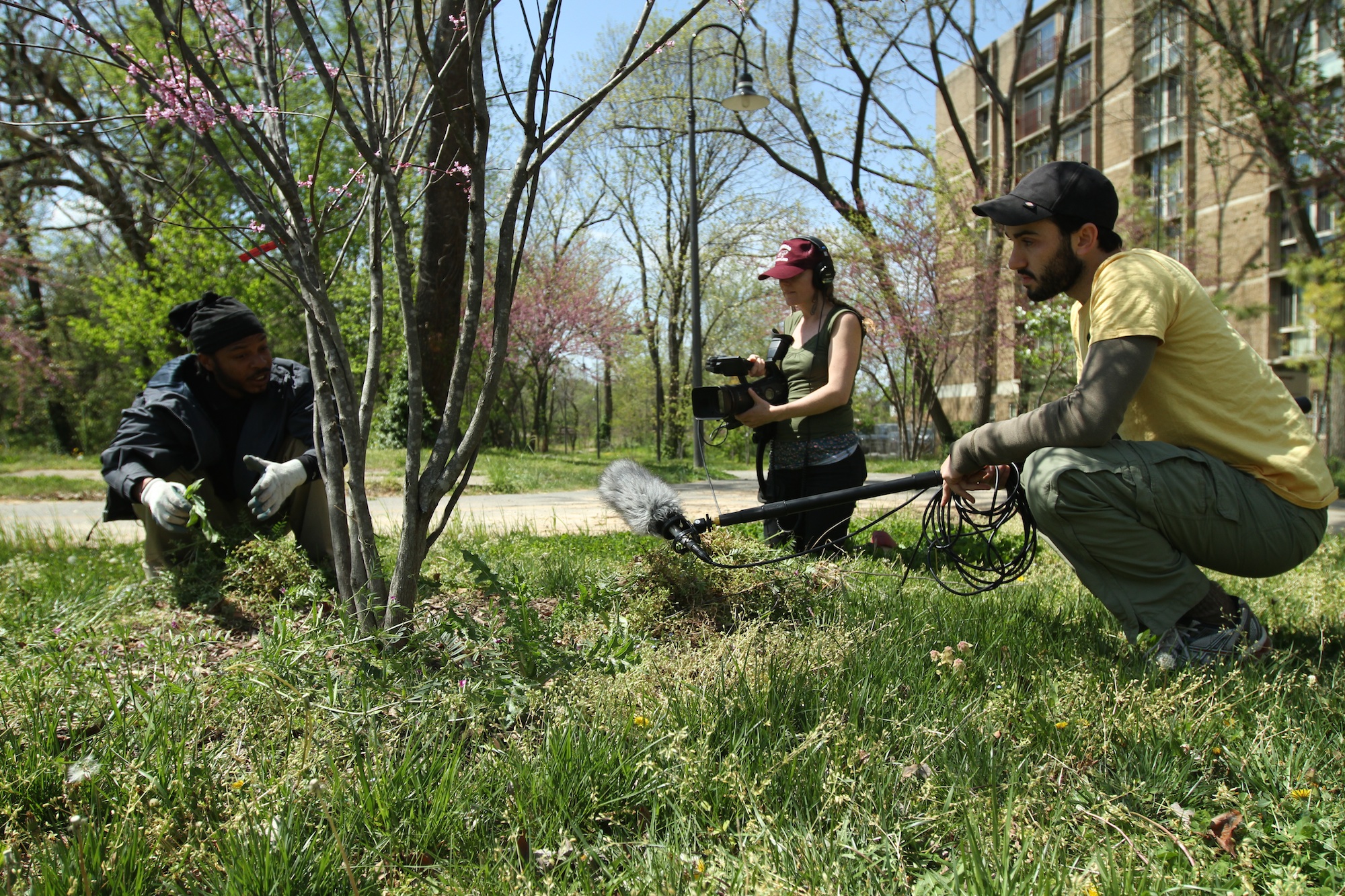
This month, I met DC-based documentary filmmakers Brandon Kramer and Lance Kramer of Meridian Hill Pictures. I got a first-hand look at their new feature film, City of Trees. The film tells the story of the recession and the recovery through a unique perspective. It takes the view from trainees and staff in the Washington Parks & People DC Green Corps — one of the ARRA-funded blue-to-green collar job training programs in DC. Over the course of about three years, the filmmakers documented program staff and three low-income DC residents — Charles Holcomb, James Magruder, and Michael Samuels. These three men navigate a transition from long-term unemployment, to an intensive hard and soft-skills training in urban forestry, and their subsequent fight to support their families and build a meaningful, sustainable career within urban communities in DC that still had unemployment figures hovering around 20 percent.
After four years working on the project, Brandon and Lance launched a Kickstarter campaign to raise critical funds to finish the film. They have smart ideas for outreach and engagement, hoping to share the film at festival, broadcast, and through community-based screenings in cities across the country. They shared an advance rough cut with me during the Thanksgiving holiday. I was moved by the way the film personalizes the intersection of the recovery with urban communities, the day-to-day experience of participating in a job training program, and the story of a disenfranchised minority participation in the emerging green economy.
City of Trees is a rare, non-partisan, people-centered window into how the massive and complex Recovery Act intersected with everyday people's lives. Through objective, critical storytelling and an observational filmmaking approach that allows real human drama to unfold on the screen as it happens in real life, the filmmakers found a way to tell an utterly compelling story about the fight to create jobs within a minority workforce largely left out of the "green collar" economy.
City of Trees features people whose stories represent the hopes, struggles and challenges of countless Americans impacted by the recession. This is the kind of film that can spark and advance an honest, inclusive and broad-reaching dialogue on how to create equal access to good jobs and safe green spaces in our cities. We need long-term, thorough, critical journalism right now as the economy is still recovering and people of all persuasions are looking for ideas for how to re-engage our nation’s long-term unemployed, particularly through new sectors like the green collar economy.
They have already assembled an incredible roster of some of the finest social-impact documentary filmmakers working today as advisors and crew on the project, including Gordon Quinn and Justine Nagan of Kartemquin Films (Hoop Dreams, The Interrupters, Life Itself) and Katy Chevigny (E-Team) as creative consultants since 2012; Eddie Martinez (To Be Heard) as senior editor; and Brian Satz (Brooklyn Castle, Time is Ill-matic) who is composing an original score. Only two weeks into the campaign, Meridian Hill Pictures has already raised almost $35,000 from more than 325 backers. The early success of the campaign is a solid indicator that there’s clearly an audience for this kind of project and a need for this story to be told.
Check out their Kickstarter campaign and consider making a donation to help finish this exceptional project. All donations are tax-deductible to the full extent of the law through their non-profit fiscal sponsor Kartemquin Films. Anything that the filmmakers raise beyond their $35,000 goal will cover an outreach and engagement to bring the film to audiences in communities nationwide. Help spread the word to people and organizations working on urban poverty, green jobs, environmental policy, job training, labor issues — or anyone anywhere who loves great documentary films.
'Hunger Games,' a mirror of America's inequality
 (CNN) -- The latest installment of the epic "Hunger Games" series hit theaters this Friday, and it promises to be the year's biggest blockbuster yet.
You can chalk up a lot of these films' popularity to the star power of leading actress Jennifer Lawrence. Certainly, the great action scenes and special effects do not hurt, either. But the real reason "Hunger Games" has captured public imagination is that its fictional world of Panem is, in so many ways, an extreme version of our own America.
For those who have not seen the movies or read the books, the "Hunger Games" tells the story of a young woman -- Lawrence's Katniss Everdeen -- and her defiance of her society's wealthy, exploitative ruling elite. These elite, the dastardly "Capitol," reinforce their power by making the children of oppressed regions battle to the death in what are called "Hunger Games."
It is a far-fetched fairy tale. But if you get caught up in the details of the story, you might miss themes -- crushing inequality, unaccountable governance, violence against children -- that resonate with the daily lives of millions of Americans.
These books and films are not popular because we want to escape to Katniss Everdeen's world. They are a phenomenon because we suspect her world is our own.
In the world of the "Hunger Games," the Capitol lives a life of extravagant wealth and consumption. Meanwhile, out in the "districts," millions of people work dangerous jobs with low pay. As the Capitol wallows in excess, the districts can barely afford to feed their children.
To put it another way, the year's biggest box-office blockbuster is a more sweeping indictment of inequality than an Elizabeth Warren speech.
It is a tale of how the worst of the 1% pull up the ladders of opportunity behind them, and hoard wealth to such a degree that all of society is poorer for it. It is Occupy's "We are the 99%," on Hollywood's big screen.
When Americans look around and see the top 25 hedge fund managers raking in $21 billion while their own paychecks get smaller and smaller, the imaginary world of Panem does not seem so far away. Is it any wonder that some striking workers at Walmart and McDonald's have adopted the Hunger Games symbol of resistance, the three-finger salute? Or that people have begun sharing their own stories of economic distress with the #MyHungerGames hashtag on Twitter?
UNCF pays a price for taking Koch cash
 (CNN) -- Sometimes the hardest thing is to say "no" to a friend. All the more reason to applaud the bravery of Lee Saunders and the American Federation of State, County and Municipal Employees.
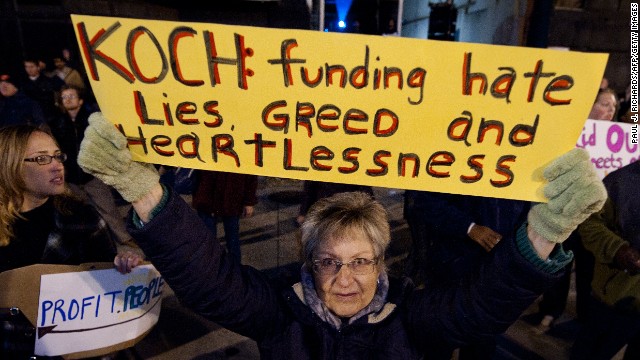
A few months ago, the United Negro College Fund accepted a $25 million grant from Charles and David Koch to support scholarships for minority students. It raised more than a few eyebrows. After all, everyone -- including me -- reveres the college fund. Its contribution to the cause of equal opportunity is legendary.
The Koch brothers are one of the most prominent funders of organizations that work to restrict early voting and registration and effectively disenfranchise African-Americans. They oppose the minimum wage, which would disproportionately help black workers. They are spending millions to lie to the public about climate disruption, which hurts the most vulnerable communities first.
In other words, the Koch brothers' agenda is great for African-Americans -- so long as we do not want to vote, make a living or avoid our homes being swept away in a flood.
It is one thing to accept money from dubious sources. One could argue -- convincingly -- that the college fund was taking money from a bad source and doing something good with it.
But the breaking point came a few weeks ago when United Negro College Fund President Michael Lomax appeared at a Koch brothers' retreat in California. The public stated purpose of this event was to build support for the Koch brothers' various political causes. The moment he stepped through the door, Lomax lent the his organization's good name to a radical agenda that causes untold damage to African-Americans.
All this was too much for AFSCME, a predominantly African-American union with a long civil rights track record that had partnered with the United Negro College Fund for years in giving out scholarships. Last month, Saunders sent Lomax a letter ending their partnership.
It was a tough decision, no doubt -- but it was the right one. (Full disclosure: AFSCME once made a donation to Rebuild the Dream, an organization that I lead.)
I am all for education. That is one of the reasons I helped start #YesWeCode, an initiative to teach computer science to black, brown and low-income young people. I am the first to point out how much brilliance and creativity our nation is losing by failing to uplift youth from low-opportunity backgrounds. That's why I am usually such a huge fan of the United Negro College Fund.
Q&A with Van Jones about #YesWeCode on PolicyLink

Where are the black and brown Mark Zuckerbergs? That was essentially the question — the challenge — that the musician Prince asked Van Jones, civil rights activist, founder of Green for All, and co-host of CNN’s Crossfire. The result is an ambitious initiative called Yes We Code, to prepare 100,000 low-opportunity youth for careers as web developers and computer programmers. Such training is critical for young people — the tech industry is a major driver of job growth. But it’s also important if the United States hopes to retain its technological edge. Without major investments to expand the talent pool, the industry will have one million jobs it cannot fill with qualified American workers within 10 years.
To build a jobs pipeline from low-income communities to Silicon Valley, Yes We Code will work with community-based organizations that are teaching computer skills to youth of color and help turn these skills into careers. PolicyLink Founder and CEO Angela Glover Blackwell spoke with Jones about his vision and strategy.
Angela Glover Blackwell: Facebook, Google, Yahoo, and LinkedIn all recently released data on their workforce and the numbers are frankly shameful; at Google, for example, only 2 percent of their overall work force is African American; 3 percent is Latino. At the same time, the U.S. is becoming an increasingly diverse nation. We recognize these trends really do not portend well for the future. Describe the genesis of Yes We Code.
Van Jones: I was at Prince’s house soon after the Trayvon Martin verdict came down. Prince said, "You know, whenever you see an African American kid wearing a hoodie, people think they’re thugs, but when people see a white kid wearing a hoodie, people think he’s some kind of tech genius." I said glibly, "That's how racism works." Prince said, "Actually it's because we haven't produced enough black Mark Zuckerbergs.” We started talking about what we could do about that.
Angela: Why is it important to focus on this issue now?
Van: Two reasons. First, coding is the new literacy. It’s the key to the future. Second, and I think even more important, the future is not being written in laws in Washington, DC — it is being written in code in Silicon Valley. That’s where change is happening and that’s what’s driving humanity forward. It is very dangerous to have a tiny, tiny demographic control all the technology to build the future. Democratizing the tools to create the future is a civil rights issue, a human rights issue, and a commonsense issue.
Angela: You announced a goal of 100,000 youth to become high-level programmers. How did you arrive at that goal and how does it relate to where we need to be?
